New City Chimney Pros prepared this independent planning guide for New City and nearby Rockland County property owners. Understand why appliance efficiency, flue area, connector layout, temperature, moisture, and chimney condition must be evaluated together before relining. It is not a remote inspection, safety clearance, or substitute for the connected appliance and liner instructions.
Condensation is an observation, not a complete diagnosis
Staining, damp debris, corrosion, or masonry deterioration can point to moisture, but the provider still needs appliance, connector, chimney, weather, and water-entry evidence.
Gas Appliance Chimneys and Condensation Clues: questions for the inspection record
Ask the provider to identify the observed condition, the evidence behind the recommendation, the source that controls the design, and any part of the route that remains concealed. Keep product names, dimensions, preparation, access, exclusions, and change conditions in writing so a later owner or technician can understand the decision.
New equipment can change an old chimney load
A replacement appliance may send a different amount and temperature of exhaust through a passage built for earlier equipment. The current category and manufacturer instructions control.
Gas Appliance Chimneys and Condensation Clues: details for the written scope
Ask the provider to identify the observed condition, the evidence behind the recommendation, the source that controls the design, and any part of the route that remains concealed. Keep product names, dimensions, preparation, access, exclusions, and change conditions in writing so a later owner or technician can understand the decision.
Connector geometry belongs in the calculation
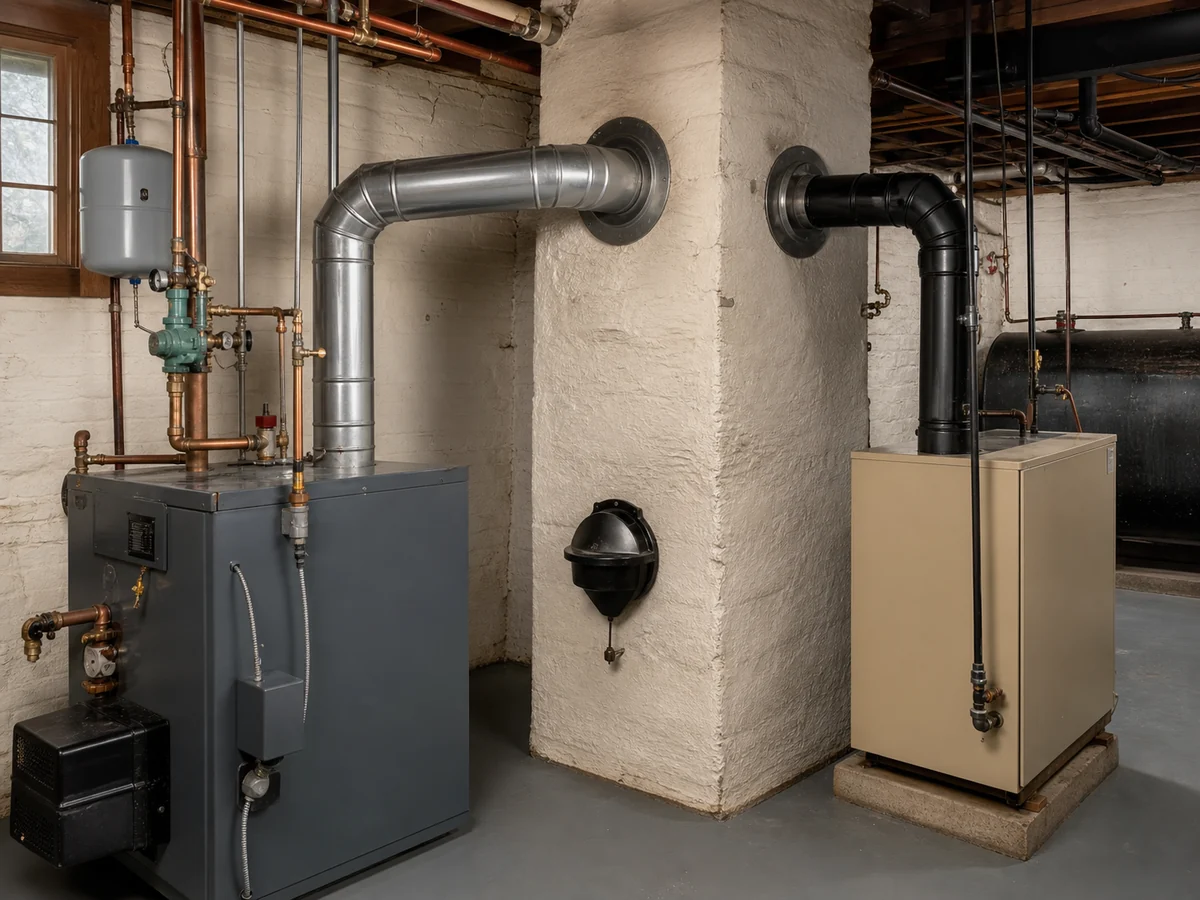
Rise, length, elbows, common venting, draft hood or fan-assisted operation, chimney height, and flue area all belong in the venting review.
Gas Appliance Chimneys and Condensation Clues: questions for the inspection record
Ask the provider to identify the observed condition, the evidence behind the recommendation, the source that controls the design, and any part of the route that remains concealed. Keep product names, dimensions, preparation, access, exclusions, and change conditions in writing so a later owner or technician can understand the decision.
Exterior leaks remain a separate pathway
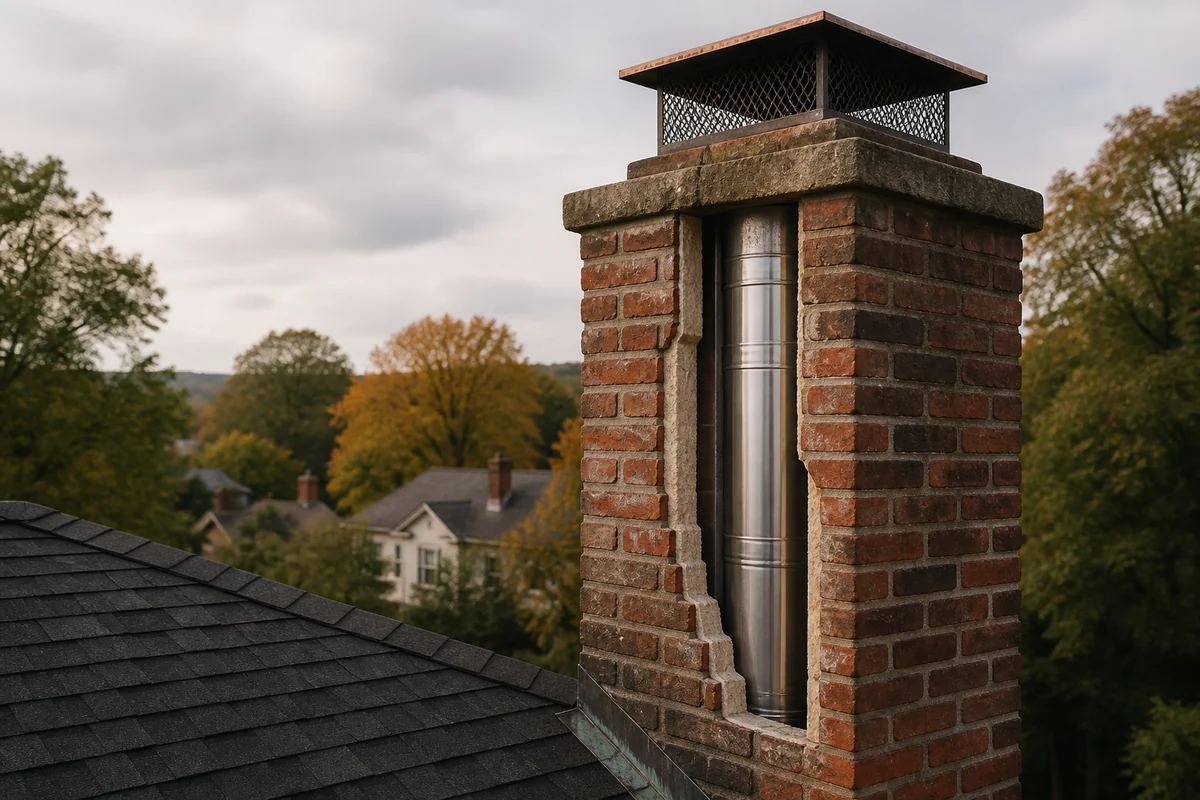
Crown, cap, flashing, and masonry water entry can coexist with flue-gas condensation. The scope should say which source each correction addresses.
Gas Appliance Chimneys and Condensation Clues: details for the written scope
Ask the provider to identify the observed condition, the evidence behind the recommendation, the source that controls the design, and any part of the route that remains concealed. Keep product names, dimensions, preparation, access, exclusions, and change conditions in writing so a later owner or technician can understand the decision.
Commission the completed system
Keep appliance data, sizing basis, liner product, connector photos, permit, inspection, and any required operating or combustion checks.
Gas Appliance Chimneys and Condensation Clues: questions for the inspection record
Ask the provider to identify the observed condition, the evidence behind the recommendation, the source that controls the design, and any part of the route that remains concealed. Keep product names, dimensions, preparation, access, exclusions, and change conditions in writing so a later owner or technician can understand the decision.
New City and Rockland County action steps
For a New City address, start current municipal questions with the Town of Clarkstown permit page and Building FAQ. Nearby properties should use the Rockland County municipality directory to find their local office. The selected appliance documentation, liner instructions, installer, and authority having jurisdiction determine the actual work.
Review all chimney liner services, compare liner cost factors, check the Rockland County service area, or request a property-specific assessment.
Sources
- Town of Clarkstown building permits
- Town of Clarkstown Building FAQ
- Rockland County municipalities
- New York Division of Building Standards and Codes FAQ
- Chimney Safety Institute of America relining workshop
- DuraVent DuraFlex stainless steel liner information
- NFPA 211 technical committee material
Common Questions
Can an online guide approve a chimney for use?
No. A qualified provider must inspect the property and apply the product, appliance, code, and local requirements.
What information should remain with the property?
Keep inspection images, appliance data, product records, permits, installation photos, closeout results, and service history.