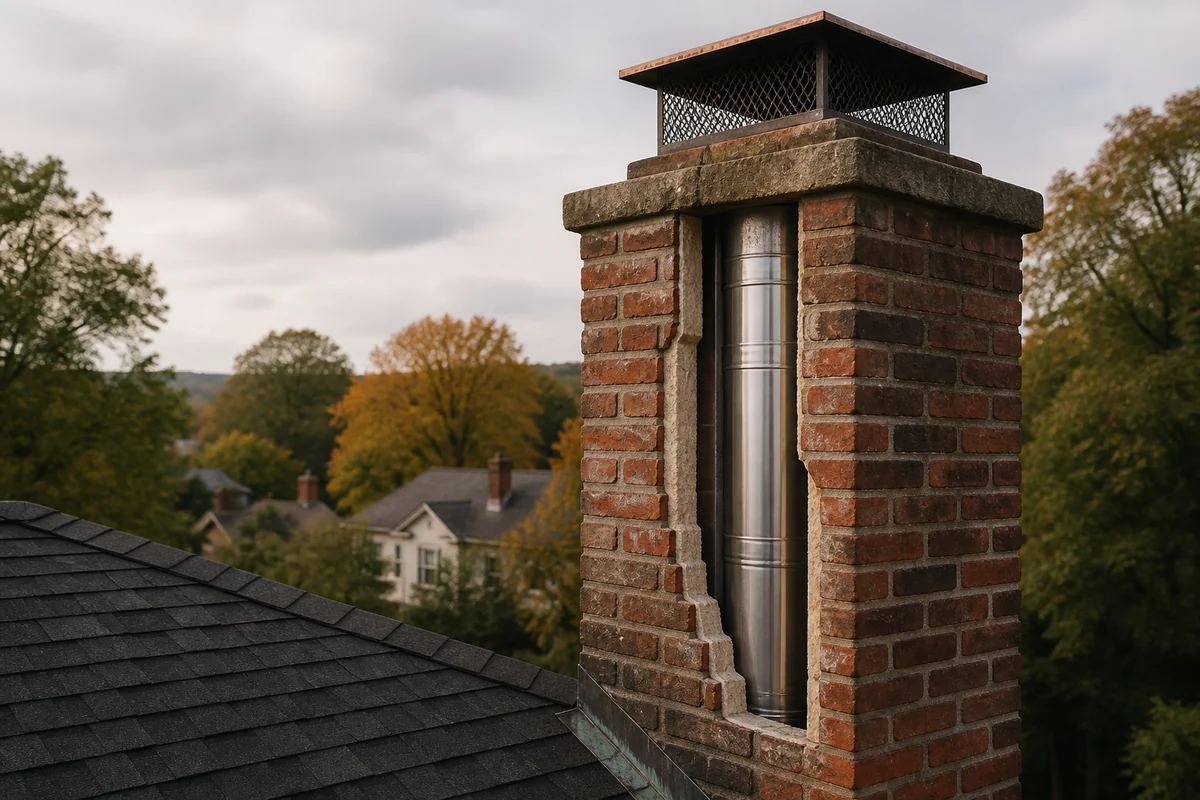
New City Chimney Pros is an independent information and quote-routing resource for property owners comparing chimney liner installation in New City and nearby Rockland County communities. The first objective is selecting and installing a liner as one appliance-specific venting system. A qualified local provider must inspect the chimney and connected appliance before issuing a final design, price, or safety determination.
The flue dimensions, height, offsets, existing tile, appliance input, fuel, connector, termination, and available access all belong in the installation record. That record keeps the recommendation tied to the actual venting system rather than the age of the house, a distant photo, or a generic material preference.
Define the appliance before sizing the new liner
Start with the appliance label, fuel, input, outlet, connector, operating history, and manufacturer instructions when they are available. Record whether the chimney serves one appliance or participates in a common-vent arrangement. Note recent equipment replacement, fuel conversion, smoke complaints, condensation, odors, staining, chimney-fire history, and any prior liner work.
Chimney Liner Installation measurements at the connection and roof
Measure the accessible flue, connector, height, offsets, termination, cleanout, and work zones. A roof photograph can show cap and access conditions, but it cannot establish the entire interior route. Interior images should identify the appliance connection and any changes in material or geometry.
Survey the flue route from base to termination
A proposed liner should identify its listed system, diameter, insulation requirement, connection details, termination, and the conditions that make those choices appropriate. Ask the estimator to identify what was observed, what remains concealed, which source controls the design, and which condition could change the scope after work begins.
Use the same property record when comparing flue sizing inputs and liner inspection evidence. Those adjacent decisions can change the preparation, product, and closeout evidence required for this scope.
Separate chimney liner installation from the surrounding chimney
The liner, masonry shell, crown, flashing, cap, firebox, smoke chamber, appliance, and connector are related but distinct components. A complete proposal should say which components are included and which require another specialist or separate authorization. A liner is not a universal sleeve. It cannot correct an unsafe appliance, unsupported connector, unknown venting load, or masonry defect that the selected system does not address.
Choose a listed liner system and compatible components
Product and method names matter. Keep the manufacturer, product family, listed use, approved fuels, diameter, components, and installation instructions with the proposal. The DuraVent stainless liner information and its installation instructions illustrate why one product family has specific parts, insulation choices, supports, and termination requirements. Those documents are examples, not endorsements or a substitute for the system selected for the property.
Check chimney liner installation component compatibility before installation
Do not assume that connectors, tees, caps, insulation, supports, or repair pieces from different systems can be mixed. Ask the provider to identify substitutions in writing and show why they remain approved for the proposed installation.
Plan insulation tile removal and masonry preparation
For New City addresses, the Town of Clarkstown permit page and building FAQ are current starting points for local questions. Rockland County also provides contractor and municipality links. The enforcing office and permit path can vary by municipality, appliance, fuel, chimney work, and project scope, so confirm the current requirements for the exact address before work begins.
Name each chimney liner installation permit and inspection step
The written scope should identify who applies, who schedules inspections, what must remain visible, and what document closes the permit. Do not treat an online permit page as approval for a specific installation.
Coordinate permit inspection and safe roof access
The cost conversation should itemize diameter, height, offsets, liner alloy or other material, insulation, tile removal, roof access, appliance connections, permits, and masonry preparation. A low number that excludes inspection, preparation, connections, access, permits, or closeout cannot be compared fairly with a complete scope.
Write chimney liner installation change conditions instead of open-ended allowances
Hidden restrictions are possible inside an existing chimney. The proposal should state which discovery can change the price, how it will be documented, and who authorizes additional work. Review the chimney liner cost guide for a reusable comparison checklist.
Test draft and document the completed venting path
The closeout packet should retain product identity, listing documentation, installation instructions, connector photos, termination photos, inspection signoff, and warranty information. The Chimney Safety Institute of America relining workshop reflects the technical nature of relining work, while NFPA 211 committee material provides standards context. The installer, authority having jurisdiction, selected product instructions, and connected appliance documentation determine the actual project requirements.
Request a property-specific chimney liner installation assessment
Use the request form to share the New City-area property, appliance, fuel, symptoms, prior inspection, and any available photos or reports. This website routes requests and provides planning information. It does not remotely diagnose a chimney or claim that one liner method fits every property.
References for this chimney liner installation guide
- Town of Clarkstown building permits
- Town of Clarkstown Building FAQ
- Rockland County contractor and municipality links
- New York Division of Building Standards and Codes FAQ
- Chimney Safety Institute of America relining workshop
- DuraVent DuraFlex stainless steel liner information
- DuraVent DuraFlex installation instructions
- NFPA 211 technical committee material
Frequently asked
01Does every chimney need the same liner size?
No. Fuel, appliance input, venting category, height, connector, flue route, and the listed system determine the correct size.
02Can a liner be installed without inspecting the flue?
A provider needs to inspect the route and connection conditions before confirming material, preparation, or access.
03Is insulation always required?
Requirements depend on the listed liner system, chimney condition, clearances, fuel, and installation instructions.