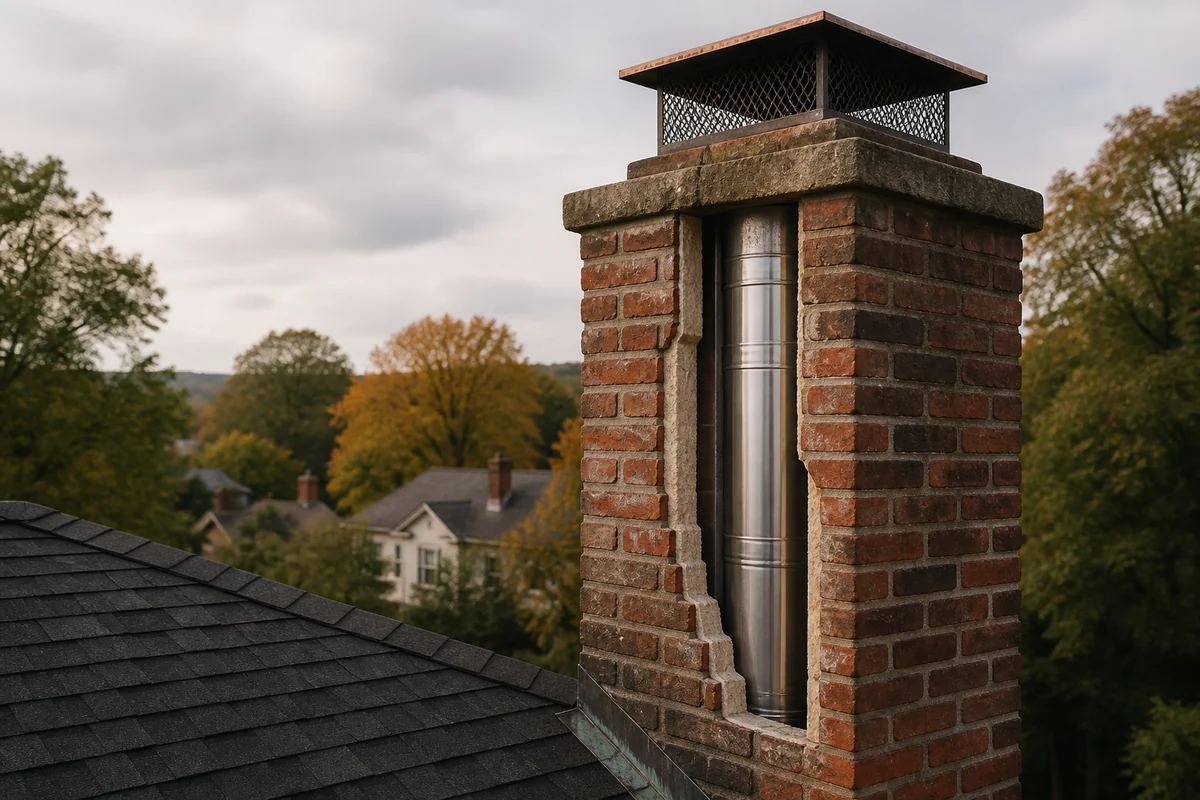
New City Chimney Pros provides independent planning information and quote routing for chimney liner work in Nyack, about 6 miles from New City. A Hudson River village with older building stock, sloped streets, and compact properties calls for careful access and moisture review. A qualified provider must inspect the actual chimney and appliance before confirming a method or price.
Nyack property context for chimney work
Nyack sits on the west bank of the Hudson River and contains a varied mix of historic and later buildings. Sloped streets and close setbacks can change safe roof and equipment access. River exposure does not diagnose chimney moisture, but crown, flashing, cap, and masonry staining should be recorded separately from liner defects. These facts guide questions about access, records, and municipal coordination. They do not prove the construction, condition, clearance, or safety of a particular chimney.
Build an address-specific Nyack chimney inventory
Record every fireplace, stove, boiler, furnace, water heater, connector, thimble, cleanout, flue, and roof termination that can be identified. Note which appliances are active and which connections appear abandoned. The inspection should name any section that could not be accessed or viewed.
Access and building form in Nyack
Historic form can limit visible exterior changes and can require early municipal coordination. Converted buildings may have abandoned flues beside active appliance vents. A Nyack report should distinguish each active passage from decorative or unused chimney openings. A steep driveway can change equipment staging even when the roof edge is low. Closely spaced buildings require debris and access planning that respects neighboring property. A decorative chimney pot should be documented before the termination design is changed. An older storefront conversion can place appliance connectors far from the original fireplace opening. A damp stain on river-facing masonry should be traced independently from interior flue corrosion. Attic access can reveal offsets that are not obvious from the basement or roof. Visible exterior work may need a design discussion earlier than a fully internal relining job. The closeout photographs should show the termination in relation to the existing roof and nearby construction. Send exterior photographs only to help the provider prepare for access. Roof images cannot replace a camera view, appliance record, or direct clearance evaluation.
Keep Nyack liner and masonry scopes separate
The liner is the internal venting passage. Crown, cap, flashing, brick, mortar, smoke chamber, firebox, appliance, and connector may need related but separately stated work. Ask the proposal to identify each included component so an exterior leak or masonry defect is not confused with a liner repair.
Inspection before Nyack liner installation
A useful record identifies the connected appliance, fuel, input, outlet, existing liner material, accessible dimensions, height, offsets, deposits, cracks, gaps, corrosion, condensation evidence, water staining, and viewing limits. Review the chimney liner inspection guide and the broader Level 2 inspection guide when property transfer, system change, malfunction, or another significant event calls for more documentation.
Match the Nyack liner to the actual appliance
Fireplaces, wood stoves, gas furnaces, and oil furnaces do not automatically share one liner product or sizing rule. Keep the appliance label and manual with the property file. If equipment is changing, have the responsible providers coordinate the new venting design before purchasing a liner.
Municipal questions for Nyack
Rockland County maintains an official municipality directory and contractor resource page. Use those sources to find the correct local office, then confirm who applies for permits, which inspections are required, what must remain visible, and what closes the record. New York State also publishes a building-code FAQ for statewide context.
Do not substitute another town’s chimney approval for Nyack
A New City or Clarkstown procedure may not be the correct procedure for a parcel in Nyack. Requirements can also differ between internal relining, visible masonry work, and heating-appliance replacement. Confirm at action time rather than copying an older project file.
Comparing chimney liner proposals in Nyack
Place each proposal beside the same inspection record. Compare product name, listed application, diameter, length, alloy or material, insulation, preparation, tile removal, connections, supports, termination, roof access, interior protection, permits, testing, cleanup, warranty, exclusions, and written change conditions. Use the liner cost guide instead of choosing only by a price-per-foot line; for a Nyack request, label every image with the address, appliance, flue, viewing direction, and date so a future provider can distinguish the active system from nearby passages and understand which access or municipal question belongs to this property.
Request a Nyack chimney liner assessment
Use the request form to share the property address, appliance, fuel, symptoms, prior inspection, and any access concerns. The site routes the request for local follow-up. It does not provide emergency dispatch or a remote safety clearance.
Sources for this Nyack guide
- Rockland County municipalities
- Rockland County contractor and municipality links
- New York Division of Building Standards and Codes FAQ
- Chimney Safety Institute of America relining workshop
- NFPA 211 technical committee material
Frequently asked
01Does every Nyack chimney need a new liner?
No. Inspection should identify the appliance, current liner, defects, sizing, and compatibility before a repair or installation is proposed.
02Which office handles chimney permits in Nyack?
Confirm the current authority for the exact address and work scope. Municipal boundaries and appliance work can change the starting office.
03What should I send with a liner request?
Share the address, appliance and fuel, symptoms, chimney photos, prior reports, and any known liner or equipment history.