New City Chimney Pros provides independent planning information and quote routing for chimney liner work in Spring Valley, about 4 miles from New City. A dense village setting with multifamily housing, small lots, and varied building ages makes roof access and appliance identification important. A qualified provider must inspect the actual chimney and appliance before confirming a method or price.
Spring Valley property context for chimney work
Spring Valley is an incorporated village within the towns of Ramapo and Clarkstown. Compact blocks can make ladder placement, parking control, and debris handling part of the chimney plan. Multifamily properties may contain several appliances or flues that need clear labels before inspection. These facts guide questions about access, records, and municipal coordination. They do not prove the construction, condition, clearance, or safety of a particular chimney.
Build an address-specific Spring Valley chimney inventory
Record every fireplace, stove, boiler, furnace, water heater, connector, thimble, cleanout, flue, and roof termination that can be identified. Note which appliances are active and which connections appear abandoned. The inspection should name any section that could not be accessed or viewed.
Access and building form in Spring Valley
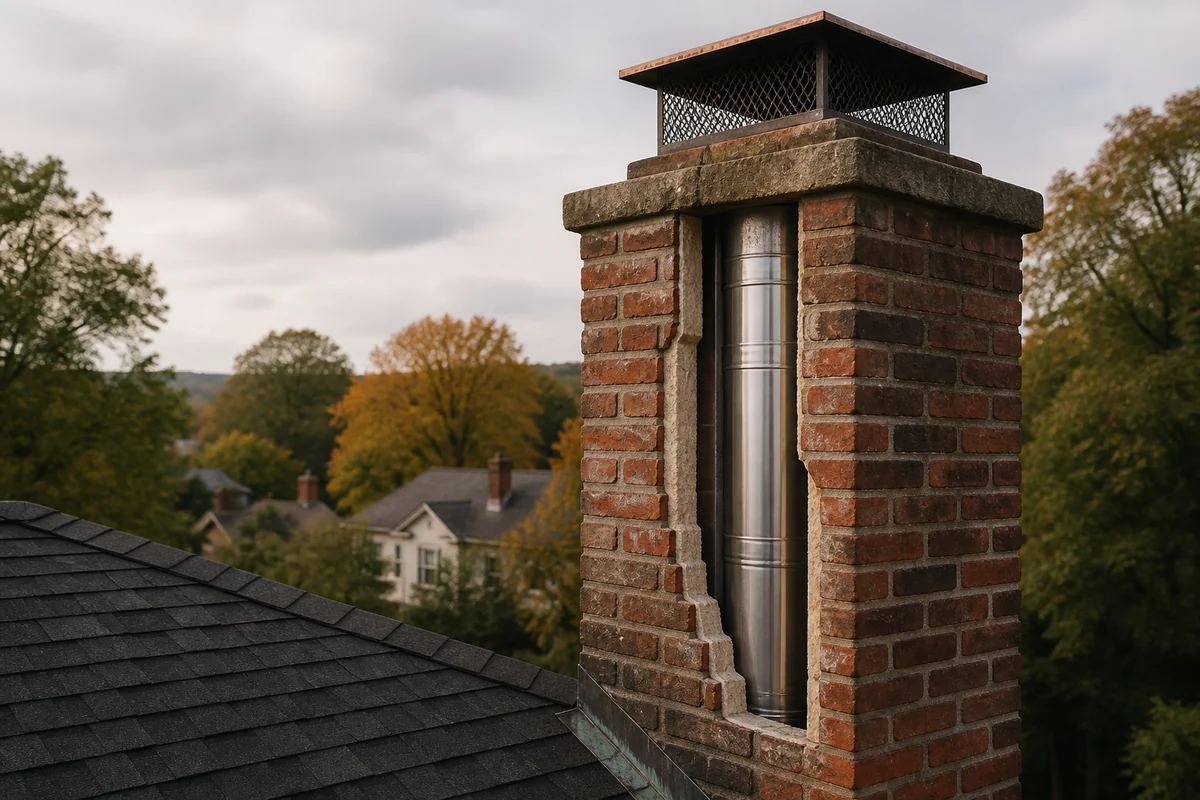
Older buildings can show multiple heating conversions, so the current appliance should drive liner sizing. Village and town boundaries can affect which office answers permit questions for a particular parcel. A landlord or manager should preserve unit, appliance, and flue identifiers in every report. An occupied multifamily building needs a written plan for unit access and appliance shutdowns. A shared chimney can contain separate passages that should not be combined in one unlabeled video. Street parking limits can affect where lifts, ladders, or protected work areas are placed. A provider should confirm whether the roof can be reached from the building or needs exterior equipment. Tenants need advance notice when a heating appliance or fireplace cannot operate during inspection. Each connector should be traced to its actual flue before a liner is ordered. A management file should associate photos with the correct address, unit, appliance, and termination. A crowded mechanical room can make connection labor different from the visible chimney length. Send exterior photographs only to help the provider prepare for access. Roof images cannot replace a camera view, appliance record, or direct clearance evaluation.
Keep Spring Valley liner and masonry scopes separate
The liner is the internal venting passage. Crown, cap, flashing, brick, mortar, smoke chamber, firebox, appliance, and connector may need related but separately stated work. Ask the proposal to identify each included component so an exterior leak or masonry defect is not confused with a liner repair.
Inspection before Spring Valley liner installation
A useful record identifies the connected appliance, fuel, input, outlet, existing liner material, accessible dimensions, height, offsets, deposits, cracks, gaps, corrosion, condensation evidence, water staining, and viewing limits. Review the chimney liner inspection guide and the broader Level 2 inspection guide when property transfer, system change, malfunction, or another significant event calls for more documentation.
Match the Spring Valley liner to the actual appliance
Fireplaces, wood stoves, gas furnaces, and oil furnaces do not automatically share one liner product or sizing rule. Keep the appliance label and manual with the property file. If equipment is changing, have the responsible providers coordinate the new venting design before purchasing a liner.
Municipal questions for Spring Valley
Rockland County maintains an official municipality directory and contractor resource page. Use those sources to find the correct local office, then confirm who applies for permits, which inspections are required, what must remain visible, and what closes the record. New York State also publishes a building-code FAQ for statewide context.
Do not substitute another town’s chimney approval for Spring Valley
A New City or Clarkstown procedure may not be the correct procedure for a parcel in Spring Valley. Requirements can also differ between internal relining, visible masonry work, and heating-appliance replacement. Confirm at action time rather than copying an older project file.
Comparing chimney liner proposals in Spring Valley
Place each proposal beside the same inspection record. Compare product name, listed application, diameter, length, alloy or material, insulation, preparation, tile removal, connections, supports, termination, roof access, interior protection, permits, testing, cleanup, warranty, exclusions, and written change conditions. Use the liner cost guide instead of choosing only by a price-per-foot line; for a Spring Valley request, label every image with the address, appliance, flue, viewing direction, and date so a future provider can distinguish the active system from nearby passages and understand which access or municipal question belongs to this property.
Request a Spring Valley chimney liner assessment
Use the request form to share the property address, appliance, fuel, symptoms, prior inspection, and any access concerns. The site routes the request for local follow-up. It does not provide emergency dispatch or a remote safety clearance.
Sources for this Spring Valley guide
- Rockland County municipalities
- Rockland County contractor and municipality links
- New York Division of Building Standards and Codes FAQ
- Chimney Safety Institute of America relining workshop
- NFPA 211 technical committee material
Frequently asked
01Does every Spring Valley chimney need a new liner?
No. Inspection should identify the appliance, current liner, defects, sizing, and compatibility before a repair or installation is proposed.
02Which office handles chimney permits in Spring Valley?
Confirm the current authority for the exact address and work scope. Municipal boundaries and appliance work can change the starting office.
03What should I send with a liner request?
Share the address, appliance and fuel, symptoms, chimney photos, prior reports, and any known liner or equipment history.