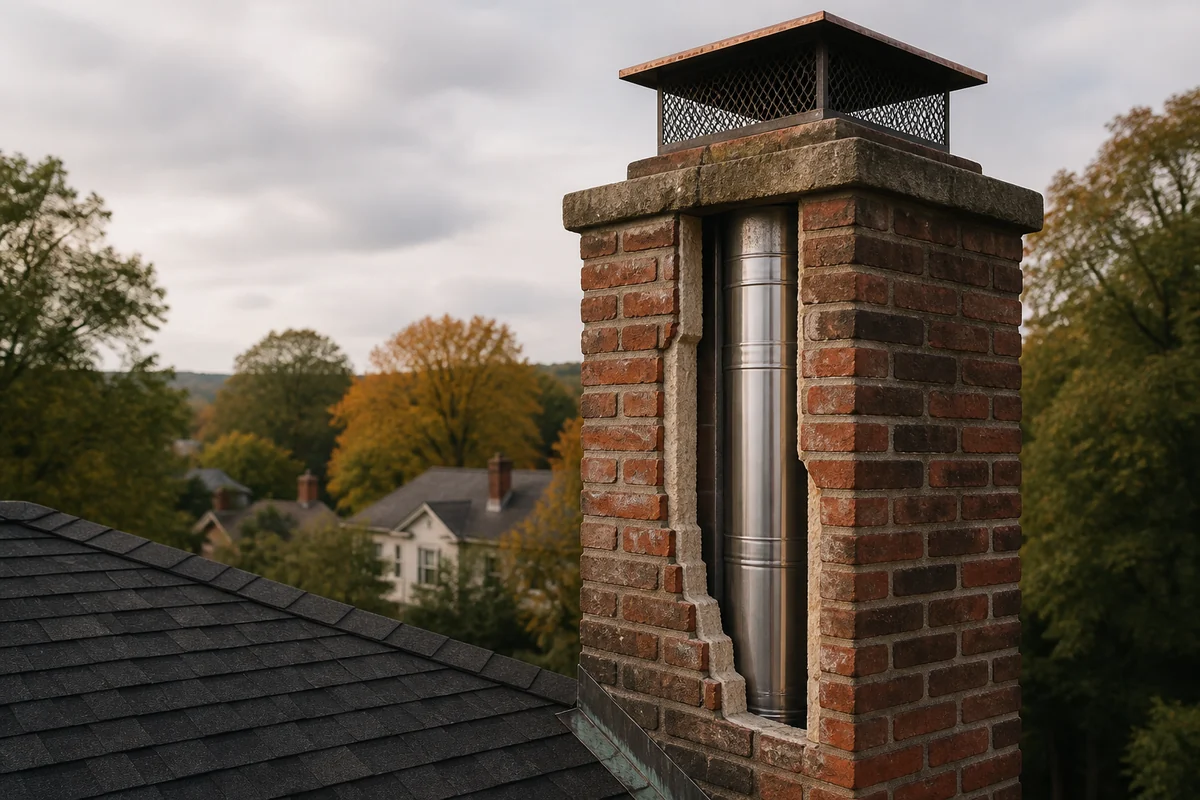
New City Chimney Pros provides independent planning information and quote routing for chimney work in Chestnut Ridge, about 9 miles from New City. This western Rockland County village in Ramapo borders the New Jersey line near Airmont, Suffern and Monsey. Its mix of mid-century ranches, split-levels and newer larger homes makes the relationship between heating equipment and fireplace flues a useful starting point. A gas furnace or water heater can use one passage while a wood fireplace uses another inside the same masonry stack. Begin with the chimney liner installation guide, then arrange an inspection that identifies what each passage actually serves.
Chestnut Ridge homes need an appliance history
A ranch with a basement furnace and a living-room fireplace can look straightforward from the driveway. Inside, the heating equipment may have changed while the original masonry passage remained. A split-level can add another complication when a finished lower level conceals a former connector or limits access to the chimney base. In a newer larger house, multiple fireplaces or separate mechanical spaces can make a single photograph an incomplete system inventory.
These housing patterns help prepare questions; they cannot establish the condition of an individual property. For a Chestnut Ridge request, list the furnace, water heater, fireplace and any other connected equipment separately. Note the fuel, appliance location and known replacement history. Mark uncertain connections as uncertain rather than assuming an old opening is abandoned. This gives the provider a useful starting record without turning a homeowner’s observations into a venting design.
Plan the chimney review around an appliance swap
A furnace replacement deserves attention even if the chimney exterior looks unchanged. Some replacement equipment uses a different venting arrangement, leaving a water heater as the only appliance connected to a previously shared passage. The remaining load and the existing flue dimensions need evaluation together. A liner selected for the former setup should not be carried forward solely because it is already installed.
Before equipment is ordered, ask the heating provider and chimney provider who will document the final venting arrangement. Preserve the new appliance instructions, input information, outlet details, connector measurements and proposed termination. The chimney liner inspection guide explains the records that help connect a flue finding to a practical scope. Where a system change or other significant event calls for broader documentation, review the Level 2 chimney inspection guide with the inspecting provider.
If a Chestnut Ridge home has already completed the swap, send the installation paperwork with the request. Explain whether the water heater still connects to the masonry chimney and whether a former furnace opening remains visible. An inspection should trace the current arrangement rather than infer it from an equipment invoice. Request a written explanation of any limitation when finished walls or inaccessible spaces prevent a complete view.
Sweeping and fireplace inspection beside gas venting
Wood fireplace maintenance and gas venting evaluation serve different purposes, even when the systems share an exterior stack. Describe fireplace use, visible deposits, smoke entering the room and the date of any available cleaning report. Ask whether the proposed visit includes sweeping, inspection, or both, and which passage each task covers. Cleaning fireplace deposits does not by itself document the neighboring furnace or water heater liner.
Keep photographs and reports labeled by appliance. A Chestnut Ridge ranch might have a fireplace on the main floor and gas equipment below it, but vertical proximity does not establish a shared passage. A newer home may have more than one fireplace with separate access needs. The inspection record should distinguish the firebox, smoke chamber and fireplace flue from the heating appliance connector and liner. If deposits obstruct a useful camera view, ask how cleaning and the subsequent inspection will be coordinated.
Liner repair and replacement need measured findings
Once the appliance arrangement is clear, compare the existing liner condition with the requirements of the equipment it serves. Ask for the location of cracks, separated joints, corrosion or other documented defects, along with the accessible flue dimensions and viewing limits. A general statement that the chimney is old gives little basis for choosing between repair and replacement. The chimney liner repair guide can help organize questions about the extent of a proposed intervention.
For a new liner, request the product identity, intended application, diameter, length, preparation and insulation details. Compare stainless steel chimney liners and cast-in-place chimney liners only where the findings support their suitability. A larger house does not automatically need a larger liner, and a small ranch does not establish a particular diameter. Appliance instructions and documented venting measurements should lead the selection.
Keep masonry and moisture findings visible
Chestnut Ridge homeowners may first notice a chimney problem as staining near a ceiling, worn mortar or deposits on exterior brick. Ask the provider to document the crown, cap, flashing and masonry separately from the internal liner. Water entry and venting defects can require related work, but the proposal should explain what evidence supports each repair. A new liner should not leave the owner guessing whether an exterior leak was included.
For a split-level, identify the room and roof plane nearest the staining. For a larger home with several stacks, label the affected chimney in every photograph. Include pictures taken safely from the ground and any prior repair records. Those images help prepare access and inspection; they do not establish the source of moisture. Request a scope that distinguishes mortar or brick repair, roof-interface work and internal flue work so the completion record can address each finding.
Access and local coordination in Chestnut Ridge
Describe driveway access, nearby landscaping, roof changes and the location of the chimney cleanout before scheduling. A ranch roof and a taller roof above an addition can require different access arrangements on the same property. Finished lower levels may need interior protection and an agreed route to the mechanical room. Ask which spaces must be available and whether appliances need to be shut down for the planned work.
The New Jersey border is useful geographic context, but it does not determine the enforcing office for a Chestnut Ridge parcel. Confirm the exact New York property address and proposed work with the appropriate municipal office. The existing Rockland County municipality directory and contractor resource page provide starting points. Ask who handles applications, required inspections and closing records. An equipment replacement and visible masonry repair may raise different questions, so describe the complete project rather than requesting approval for an unspecified chimney job.
Compare proposals and save the final arrangement
Give each provider the same appliance inventory and inspection findings. Compare preparation, liner specifications, connector work, termination, access, masonry repairs, testing, cleanup and exclusions. The liner cost guide helps frame scope questions without reducing the decision to chimney height. Clarify who coordinates with the heating installer if the work follows a furnace or water heater replacement.
At completion, save the installed product information, appliance records, photographs and any required approval together. The file should show what remains connected, which openings were addressed and which areas remained inaccessible. This is especially helpful when a future water heater replacement changes the venting question again.
Nearby Airmont discusses varied postwar parcels and roof forms, Suffern adds mountain-adjacent access context, and Monsey covers denser single-family and multifamily arrangements. For Chestnut Ridge, keep the focus on this home’s fireplace passages and the gas equipment actually using the chimney today. Use the request form to share the address, appliance history, symptoms and prior reports for local follow-up. The site does not provide emergency dispatch or remote safety clearance.
Frequently asked
01Why review the water heater flue when a furnace stops using the chimney?
Removing the furnace can leave the water heater venting into a passage sized for a different combined load. Ask the heating and chimney providers to document the remaining appliance and evaluate its venting before the change is closed out.
02Can one Chestnut Ridge visit cover a gas flue and a wood fireplace?
Request both systems explicitly when arranging the visit. The report should distinguish the gas appliance passage from the fireplace passage and state which cleaning, camera inspection and access tasks are included for each.
03Does a taller chimney on a newer large home settle the sizing question?
Height alone does not establish compatibility. Appliance instructions, vent dimensions, connector layout, liner condition and the selected system all belong in the evaluation.
04What if a split-level renovation hides the original chimney connection?
Identify the finished room and suspected connection before the appointment. Have the provider explain the access needed and record any concealed section that cannot be evaluated without additional work.
05Should white deposits on the brick determine the liner repair scope?
No. Surface deposits are a reason to investigate moisture and masonry conditions, but they do not identify the condition of the internal passage. Request separate findings for exterior water entry and appliance venting.