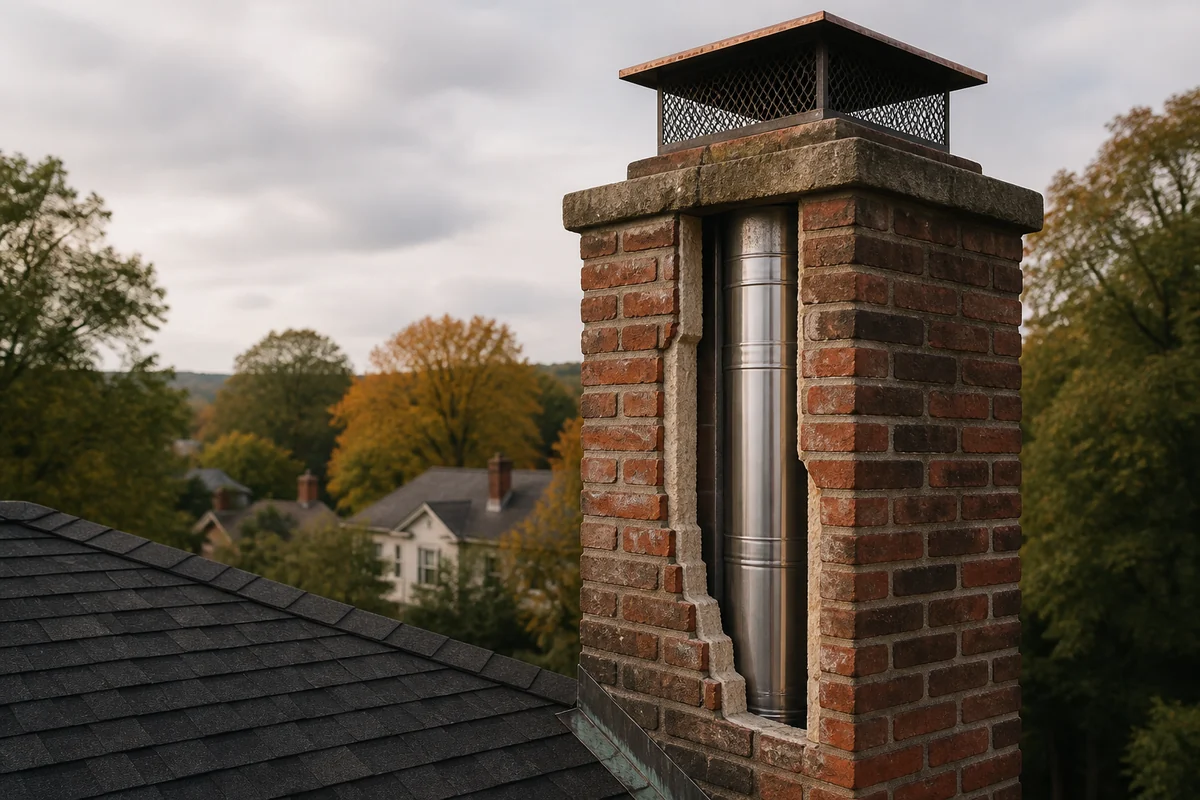
New City Chimney Pros provides independent planning information and quote routing for chimney liner work in Hillcrest, about 4 miles from the New City hub. This Ramapo hamlet sits between New City, Nanuet and Spring Valley, with the Route 45 corridor providing a useful reference for access planning. Its denser postwar and multifamily housing mix raises practical questions about appliance identification, occupied entrances, and separate flue passages. Begin with the chimney liner installation guide, then have a qualified provider inspect the property before confirming a method or installation scope.
Hillcrest housing and the venting record
Hillcrest combines postwar houses with multifamily properties in a more compact setting than New City proper. That mix matters when a homeowner, landlord, or manager assembles the chimney history. A report for one detached house may cover a fireplace and a heating appliance, while a multifamily file may need to distinguish several units from a common mechanical room. Neither building density nor an approximate construction era establishes whether an existing liner needs replacement.
A Hillcrest postwar house can retain its original chimney shell after the heating equipment has changed. Ask which appliance is connected now, whether earlier connections remain, and whether a finished basement conceals the cleanout. At a multifamily property, establish whether the appliance belongs to one unit or serves common spaces before scheduling access. An inspection report should make those distinctions readable without relying on a previous owner’s explanation.
Build a Hillcrest appliance-to-flue map
Give every identifiable fireplace, boiler, furnace, water heater, stove, connector, and cleanout a consistent reference. Carry that reference through photographs, camera clips, measurements, and the proposal. For a stack with several passages, trace each connection to its own flue and termination rather than naming the whole stack after whichever appliance is easiest to see. An unused thimble should be documented as an observed connection, with its status confirmed by the inspecting provider. The labels help prevent a repair recommendation for one passage from being applied to its neighbor.
Route 45 access and occupied buildings
Properties near the Route 45 corridor need an address-specific plan for arrival and equipment staging. Confirm where a vehicle can unload, whether a driveway must remain open, and how residents reach their entrances during the visit. A nearby side street may offer a different approach from a property directly on the corridor, but the provider should establish permitted access before relying on it. Exterior photographs can help explain the setting without replacing an on-site assessment.
In Hillcrest’s denser housing mix, the route from the mechanical room to the roof can involve more than one occupied space. Identify who can open the relevant rooms and whether a manager must coordinate access. Ask the provider to state which appliances must be shut down and how residents will receive notice. A blocked cleanout or unavailable unit should appear as a specific viewing limit in the report, rather than disappearing from the final scope.
For postwar houses with additions, photograph the chimney from more than one ground-level angle. A later roofline or enclosed side entrance can change the approach even where the brick stack looks unchanged. Keep access photographs separate from condition findings so a convenient ladder position is never treated as evidence that the flue is serviceable.
Camera findings before a Hillcrest liner method
The chimney liner inspection guide explains the records needed to evaluate an existing system. Ask for appliance and fuel identification, accessible flue dimensions, height, offsets, liner material, deposits, damaged joints, corrosion, and evidence of moisture. The report should locate findings within the passage and describe areas the camera could not show.
Review the Level 2 chimney inspection guide when a property transfer, equipment change, malfunction, or other relevant event calls for that inspection scope. For a Hillcrest building with uncertain appliance history, resolve the inspection scope before accepting a material recommendation. A camera view helps document the flue interior, but it does not erase limits on concealed construction or inaccessible spaces. Request a written explanation of how those limits affect the proposed work.
In a multifamily stack, preserve separate footage for each identified passage. Start the record with the address, unit or common-area reference, appliance, flue identifier, and viewing direction. That makes the findings useful when an owner changes managers or a later provider investigates a different appliance.
Stainless and cast-in-place options in Hillcrest
A stainless steel chimney liner should be specified for the actual appliance, fuel, dimensions, and installation conditions. Ask the proposal to identify the product, sizing basis, insulation requirements, connections, supports, and termination. A heating-appliance liner and a fireplace liner should not be treated as interchangeable simply because they occupy the same masonry stack.
A cast-in-place liner needs its own documented suitability assessment, preparation plan, and installation requirements. Have the provider explain how the inspected passage and appliance support that choice. The comparison should address usable dimensions and access as well as the intended venting application. Hillcrest’s mix of postwar houses and multifamily buildings is a reason to inspect carefully, not a reason to prescribe either method throughout the hamlet.
Where findings support a narrower scope, compare the chimney liner repair guide. Keep liner work separate from crown, flashing, cap, brick, mortar, firebox, and connector work in the proposal. An exterior water-entry problem and an internal flue defect may require coordinated but distinct remedies.
Municipal questions for a Hillcrest parcel
Hillcrest is a hamlet within the Town of Ramapo in Rockland County. Begin municipal questions with the exact parcel and the proposed work, rather than transferring a New City or Spring Valley project checklist. The nearby community names are useful geographic references, but they do not establish permit jurisdiction for a particular property.
Rockland County’s municipality directory and contractor resource page provide the same municipal starting points used elsewhere in these guides. Confirm the responsible office, who submits the application, which inspections apply, and what documentation closes the work. Ask whether an appliance replacement and chimney relining need coordinated review. Consult the New York building-code FAQ for statewide context while confirming current requirements with the responsible local office.
Compare Hillcrest proposals against one record
Use the same labeled inspection file for each proposal. Compare preparation, product, dimensions, insulation, connections, roof access, protection of occupied spaces, permits, testing, cleanup, exclusions, and written change conditions. The chimney liner cost guide explains why visible chimney length alone does not describe the work. For a multifamily building, ask which appliances and passages are included and whether access coordination is part of the scope.
Keep the final inspection report, installation documentation, appliance information, and municipal closeout together. A future owner or manager should be able to locate the relevant flue without reconstructing the job from unlabeled roof photographs.
Request a Hillcrest chimney liner assessment
Send the address, appliance and fuel, symptoms, prior reports, and access concerns through the contact form. Include unit or common-area identifiers where relevant. The site routes requests for local follow-up; a provider must inspect before confirming the work.
For nearby planning context, compare New City, Nanuet, and Spring Valley, or browse all service areas. Their guides help frame regional questions while Hillcrest’s own parcel, appliance map, and inspection findings determine its project scope.
Frequently asked
01Does a Hillcrest mailing address establish the chimney permit office?
Use the actual parcel to confirm municipal jurisdiction. Hillcrest is a Ramapo hamlet, and a nearby Spring Valley or New City mailing reference should not substitute for checking the address and proposed scope.
02What should a Hillcrest multifamily flue record identify?
Connect each unit or common mechanical area to its appliance, connector, flue, cleanout, and roof termination. Label camera footage with those identifiers and state which passages could not be inspected.
03How does the Route 45 corridor affect a chimney appointment?
Properties on or near the corridor should discuss parking, driveway access, equipment unloading, and occupied entrances before the visit. Road proximity does not establish liner condition or the appropriate installation method.
04Can a Hillcrest postwar house use the liner specified for its neighbor?
Similar building forms can conceal different appliance replacements, additions, and flue dimensions. A camera record and the connected appliance's requirements should determine the proposal for each house.
05Should stainless or cast-in-place be selected before a Level 2 inspection?
Document the appliance and existing flue first. Where a Level 2 inspection is appropriate, use its camera findings, dimensions, access limits, and condition report to compare suitable liner systems.