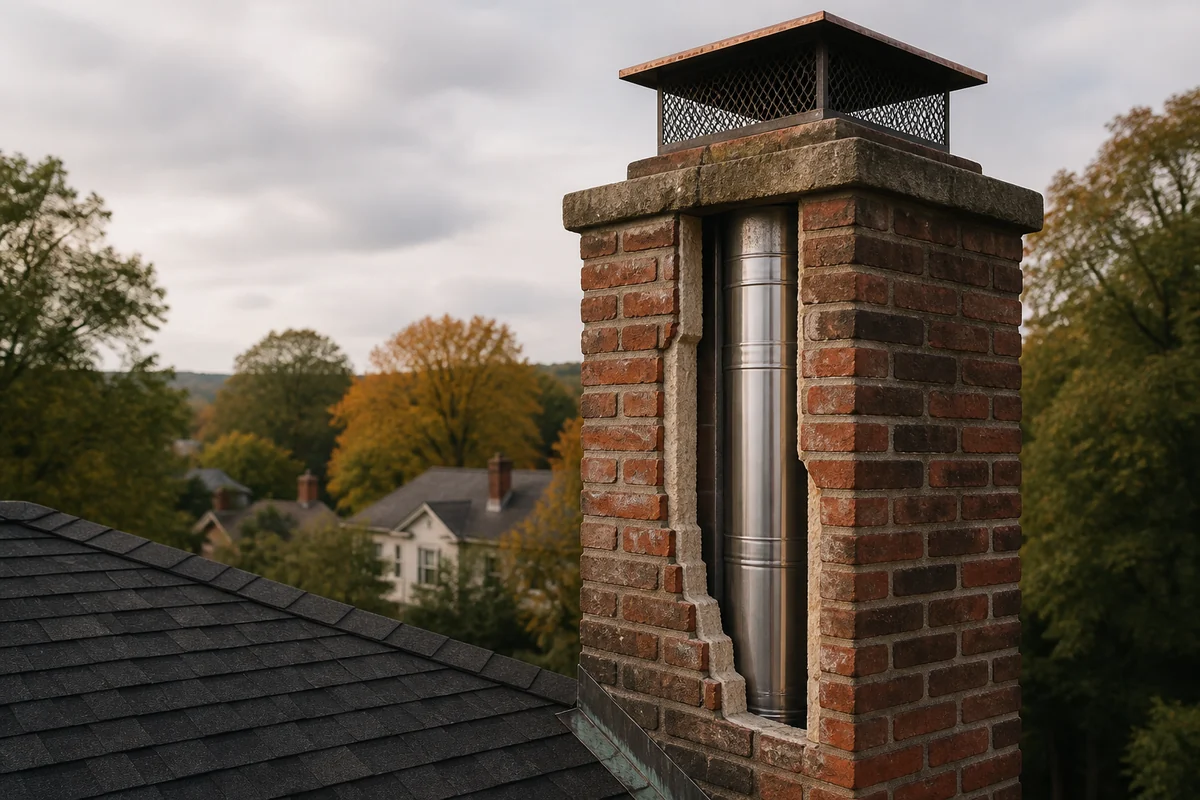
New City Chimney Pros provides independent planning information and quote routing for chimney work in Sparkill, about 9 miles from New City in Rockland County. This small hamlet sits in the Town of Orangetown along the Sparkill Creek valley between Piermont, Tappan, and Orangeburg, where Route 340 and Route 9W meet near the low ground beside the creek. Older brick chimneys, a damp valley floor, and leaf-shedding wooded slopes make the chimney itself only part of the picture; the approach, the crown, and the surrounding masonry each deserve their own notes.
Many Sparkill houses date from the late nineteenth and early twentieth century and still carry original brick stacks, while mid-century capes and ranches sit higher on the wooded slopes above the creek. Age and appearance do not establish what is inside a flue. Begin with the chimney liner inspection guide, then arrange a direct look at the fireplace, appliance, and passage. The site helps route the request; the inspecting provider determines the appropriate work.
Read the valley setting before the chimney
A low lot near the creek and a shaded, tree-lined parcel on the slope above it present different conditions for the same chimney. Describe the ground around the house when requesting a visit. Standing water, a damp foundation line, or heavy leaf fall near the base can all affect how masonry holds moisture and should be recorded rather than assumed. These observations frame questions about exposure; they do not prove that water entered a particular flue.
Wooded surroundings also shape access and debris. Low branches, soft or sloping ground, and narrow driveways common on older hamlet lots can limit where a ladder or vehicle can sit. Note gates, retaining features, and any route that crosses a neighbor’s land. Ground-level photographs help a provider plan the approach, but the decision about ladders, another access method, or a return visit belongs to the person on site. Keep those arrangements separate from any conclusion about the chimney’s condition.
Separate sweeping from inspection
For a wood-burning fireplace, a sweep request should note recent use, visible deposits, odors, and any suspected blockage. In a leaf-heavy setting, mention debris or nesting material that may have collected at the cap or crown. Review the chimney sweep and inspection context so cleaning findings and condition findings are recorded as separate items. Sweeping can clear accessible deposits and expose surfaces that were hidden, but a clean opening does not prove the full passage is sound.
An older Sparkill stack may contain an unlined passage, aging clay tiles, or a later liner set inside the original brick. Record the material actually observed rather than labeling every historic chimney the same way. When a property transfer, an equipment change, or a malfunction calls for fuller documentation, review the Level 2 chimney inspection guide. Ask for images tied to a specific passage, with any section that could not be reached clearly identified.
Trace a converted flue before choosing a liner
Fuel changes are common in a hamlet of this age, and a brick chimney first built for a fireplace or a coal-era appliance may now serve a gas or oil heating unit. A conversion can leave a flue oversized, abandoned in part, or routed through offsets that are hard to see from the ground. Ask the provider to trace the active passage from the appliance connection to the termination and to label original, altered, active, and abandoned sections where that history can be observed.
For clay-lined systems, distinguish a documented tile crack or open joint from damage to the surrounding brickwork. The chimney liner repair guide sets out questions to raise before accepting a full replacement. If relining is proposed, the installation guide helps organize the scope around preparation, supports, connections, insulation, and the top termination. Compare a stainless steel liner system against a cast-in-place liner only after the appliance and passage are documented, not because the house is old or the chimney looks weathered.
Separate creek-valley dampness from the source of water
A damp valley floor and repeated freezing and thawing make crowns and mortar useful places to investigate, but they do not identify where water entered. A crack at the crown, an open masonry joint, failed flashing, and a saturated cap each create a different path. Photograph staining and visible deterioration from a safe position, then ask the provider to connect each proposed repair to the defect that was actually found. Valley dampness alone does not explain an interior damp patch.
Leaf and debris load adds to this. Material held against a crown or cap can keep masonry wet long after rain, accelerating freeze-thaw damage at the top of the stack. Crown repair, repointing, brick replacement, flashing work, and cap or screen changes should appear as distinct items when needed. An internal liner does not repair loose exterior masonry, and fresh mortar does not establish that an unseen flue joint is intact. Older brickwork deserves a material-specific assessment before a masonry method is chosen.
Confirm the office, scope, and completion record
For Sparkill work, confirm the current enforcing office using the exact property address. The hamlet falls within the Town of Orangetown, so a permit inquiry generally starts there rather than at a village hall, but the right process can still differ between internal relining, visible masonry work, and a heating-appliance change. Rockland County maintains an official municipality directory and contractor resource page, and New York State publishes a building-code FAQ for statewide context. Ask who applies, which inspections are required, what must remain visible, and what closes the record.
Compare proposals against the same inspection record. Request the liner identity, preparation steps, masonry items, access arrangements, interior protection, cleanup, exclusions, and written conditions for added work. The liner cost guide offers a framework for comparing scope rather than a single price-per-foot line. Label every image with the address, appliance, flue, viewing direction, and date so a future provider can tell the active system from nearby passages. At completion, keep photographs of the connections and top assembly, the product instructions, and any inspection records with the original findings.
Plan a Sparkill chimney assessment
Nearby guides offer useful comparisons: Piermont covers a compact Hudson River village with tight access, Tappan discusses a historic Orangetown hamlet with complex chimney routes, and Orangeburg considers older housing stock near the Tappan Zee corridor. For Sparkill, keep the emphasis on the creek-valley setting, the leaf and debris load from the wooded slopes, and the condition of weather-exposed masonry at your address.
Use the request form to describe the fireplace or heating appliance, recent use, symptoms, existing reports, and any access limits near the creek or slope. Include ground-level photographs of the chimney and approach if available. The request supports local follow-up for sweeping, inspection, liner, or masonry needs. It does not provide emergency dispatch or replace a direct assessment of the chimney.
Frequently asked
01How does the Sparkill Creek valley setting change what a chimney visit should look at?
Low, damp ground and shaded lots raise the chance of moisture in and around masonry. Ask the provider to separate weather exposure from a documented flue or crown defect rather than treating a damp reading as proof of one cause.
02Why does leaf and debris load matter for a chimney near wooded slopes?
Falling leaves and twigs can collect at a cap, crown, or open flue and hold moisture against masonry. Note any blockage, nesting, or standing debris when requesting a visit so sweeping and cap questions are recorded alongside the inspection.
03Can an old brick chimney that changed fuels keep its original clay flue?
Sometimes, but only after the passage is measured against the current appliance. A conversion may leave a flue oversized or unsuited to the new equipment, so have the condition and sizing documented before assuming the existing tile can stay.
04Should a crown crack on a Sparkill chimney be blamed for an interior damp patch?
Not automatically. A crown sheds water at the top while flashing, mortar joints, and the flue each create separate water paths. Ask the provider to connect a proposed repair to the defect that was actually observed.
05Where should I start with a chimney permit question for a Sparkill address?
Sparkill is a hamlet in the Town of Orangetown, so a permit inquiry usually begins with the Orangetown office rather than a village hall. Confirm the current enforcing authority for the exact address and the proposed scope.