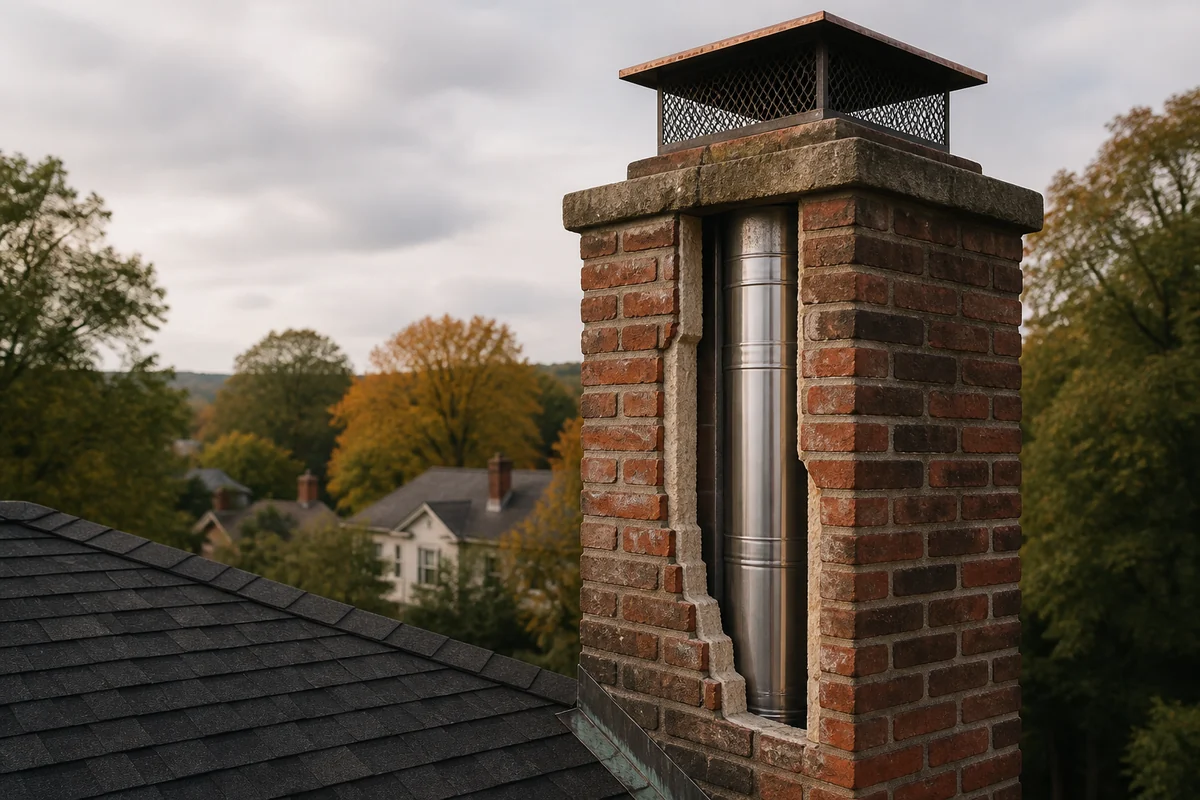
New City Chimney Pros provides independent planning information and quote routing for chimney work in Upper Nyack, about 7 miles from New City in Rockland County. This small Hudson River village sits in the Town of Clarkstown just north of the Village of Nyack, east of Valley Cottage, and south of Rockland Lake State Park, strung along North Broadway as the land rises from the riverbank. Many houses here are large, with tall brick stacks that served several fireplaces, so a single chimney is often really a group of flues that each deserve their own notes.
Older riverfront and hillside homes, including substantial nineteenth and early twentieth century houses, sit beside mid-century construction on the same streets. Size and age do not establish what is inside a flue. Begin with the chimney liner inspection guide, then arrange a direct look at each fireplace, appliance, and passage. The site helps route the request; the inspecting provider determines the appropriate work.
Treat a multi-flue stack as several passages
A large Upper Nyack chimney can carry two, three, or more separate flues inside one brick mass, some for fireplaces and others for a furnace, boiler, or water heater added later. When you request a visit, say how many fireplaces and heating appliances the house has and which you believe share a chimney. Ask the provider to map each flue to what it serves, to label active and abandoned passages, and to identify any that could not be viewed. A report that describes the stack as a single opening hides the detail that matters most in houses like these.
Age and prior alterations compound this. An original fireplace flue, a parlor-stove connection closed off generations ago, and a modern appliance vent can run side by side through the same masonry. Record the material actually observed in each passage rather than assuming every flue in an old house is the same. Where a sale, an equipment change, or a malfunction calls for fuller documentation, review the Level 2 chimney inspection guide and ask for images tied to a specific flue.
Read the riverfront and the hillside together
North Broadway runs between the water and the rising ground behind it, so one Upper Nyack lot can face the open river while its neighbor sits tucked against a wooded slope. Those are different conditions for the same kind of chimney. Describe where the house sits, how the land falls away, and which direction the chimney faces when you request a visit. A river-facing stack usually meets more wind-driven rain and wetting than a sheltered one, and that exposure should be recorded as context rather than treated as proof that water entered a particular flue.
Access follows the terrain. A house that shows a low roof edge from the uphill street side can stand much taller toward the river, and steps, retaining walls, porch roofs, and narrow drives can keep a ladder from reaching the crown as a front photograph might suggest. Note gates and any route that crosses a neighbor’s land. Ground-level photographs help a provider plan the approach, but the decision about ladders, another access method, or a return visit belongs to the person on site. Keep those arrangements separate from any conclusion about chimney condition.
Separate sweeping from inspection
For a wood-burning fireplace, a sweep request should note recent use, visible deposits, odors, and any suspected blockage. In a house with several fireplaces, say which ones are used and which have sat idle, because a long-unused flue can hold old deposits, debris, or nesting material that a busy one does not. Review the chimney liner inspection guide so cleaning findings and condition findings are recorded as separate items. Sweeping can clear accessible deposits and expose surfaces that were hidden, but a clean opening does not prove the full passage is sound.
An older Upper Nyack stack may contain an unlined passage, aging clay tiles, or a later liner set inside the original brick, and different flues within one chimney can each tell a different story. Ask the provider to document each passage on its own terms rather than labeling the whole chimney at once. Request images tied to a specific flue, with any section that could not be reached clearly identified, and ask whether cleaning is needed before the evaluation can be completed.
Check a converted flue before choosing a liner
Fireplace and stove conversions are common in houses of this age, and a flue first built for an open fire may now serve a wood stove, insert, or a gas or oil heating unit. A conversion can leave a passage oversized, partly abandoned, or routed through offsets that are hard to see from the ground. Ask the provider to trace the active route from the appliance connection to the termination and to confirm the sizing against the manufacturer requirements for the equipment actually installed. The appliance, not the age of the house, should drive the choice.
For clay-lined systems, distinguish a documented tile crack or open joint from damage to the surrounding brickwork. The chimney liner repair guide sets out questions to raise before accepting a full replacement. If relining is proposed, the installation guide helps organize the scope around preparation, supports, connections, insulation, and the top termination. Compare a stainless steel liner system against a cast-in-place liner only after the appliance and passage are documented, and have the proposal state which flue in a multi-flue stack receives work and which remain outside the contract.
Separate river wind from the source of water
River wind, wind-driven rain, and repeated freezing and thawing make crowns, mortar, and flashing useful places to investigate on an exposed stack, but they do not identify where water entered. A crack at the crown, an open masonry joint, failed flashing, and a saturated cap each create a different path, and a tall chimney can have sound masonry on its sheltered face and weathered masonry on the side that meets the river. Photograph staining and visible deterioration from a safe position, then ask the provider to connect each proposed repair to the defect that was actually found.
Crown repair, repointing, brick replacement, flashing work, and cap or screen changes should appear as distinct items when needed. An internal liner does not repair loose exterior masonry, and fresh mortar does not establish that an unseen flue joint is intact. Older brickwork on a weather-exposed stack deserves a material-specific assessment before a masonry method is chosen, and the proposal should explain what sound material can remain and how loose or damaged sections will be handled.
Confirm the office, scope, and completion record
For Upper Nyack work, confirm the current enforcing office using the exact property address. Upper Nyack is an incorporated village within the Town of Clarkstown, so the process can differ from an unincorporated Clarkstown address nearby, and it can also differ between internal relining, visible masonry work, and a heating-appliance change. Rockland County maintains an official municipality directory and contractor resource page, and New York State publishes a building-code FAQ for statewide context. Ask who applies, which inspections are required, what must remain visible, and what closes the record.
Compare proposals against the same inspection record. Request the liner identity, preparation steps, masonry items, access arrangements, interior protection, cleanup, exclusions, and written conditions for added work. The liner cost guide offers a framework for comparing scope rather than a single price-per-foot line. Label every image with the address, appliance, flue, viewing direction, and date so a future provider can tell one passage from another in a multi-flue stack. At completion, keep photographs of the connections and top assembly, the product instructions, and any inspection records with the original findings.
Plan an Upper Nyack chimney assessment
Nearby guides offer useful comparisons: the Nyack guide covers the compact village downtown just to the south, the South Nyack guide discusses tall original stacks on steep riverfront lots near the bridge landing, and the Valley Cottage guide considers postwar ranch and cape housing inland. For Upper Nyack, keep the emphasis on the multi-flue stack, the split between riverfront and hillside exposure along North Broadway, and the condition of weather-exposed masonry at your address.
Use the request form to describe each fireplace or heating appliance, recent use, symptoms, existing reports, and any access limits set by the slope or the river side. Include ground-level photographs of the chimney and approach if available. The request supports local follow-up for sweeping, inspection, liner, or masonry needs. It does not provide emergency dispatch or replace a direct assessment of the chimney.
Frequently asked
01My Upper Nyack house has one chimney but several fireplaces. How should that be inspected?
A single stack can hold more than one flue, and each needs its own record. Ask the provider to identify every flue, say which appliance or fireplace it serves, and note any that could not be reached rather than treating the whole chimney as one passage.
02Does a North Broadway address near the river change what sweeping and inspection should cover?
The river-facing side of a stack usually takes more wind and wetting than the sheltered side. Ask that sweeping findings and exterior condition be recorded separately, and that weather exposure be described rather than used to diagnose an interior problem on its own.
03My lot drops from the street toward the river. Will that affect chimney access?
It can. A modest roof edge from the uphill side may sit well above grade on the river side, so describe both elevations, steps, and retaining walls when you request a visit. The provider decides on ladder or equipment placement after reviewing the approach.
04I am converting an old fireplace to a stove. Can the original clay flue stay?
Only after it is measured against the new appliance. A flue built for an open fireplace may be oversized or unsuited to a stove, so have the condition, sizing, and manufacturer requirements documented before assuming the existing tile can remain in service.
05Where does a chimney permit question for an Upper Nyack address usually begin?
Upper Nyack is an incorporated village within the Town of Clarkstown, so the process can differ from an unincorporated address nearby. Confirm the current enforcing office for the exact property and the proposed scope before any work is scheduled.