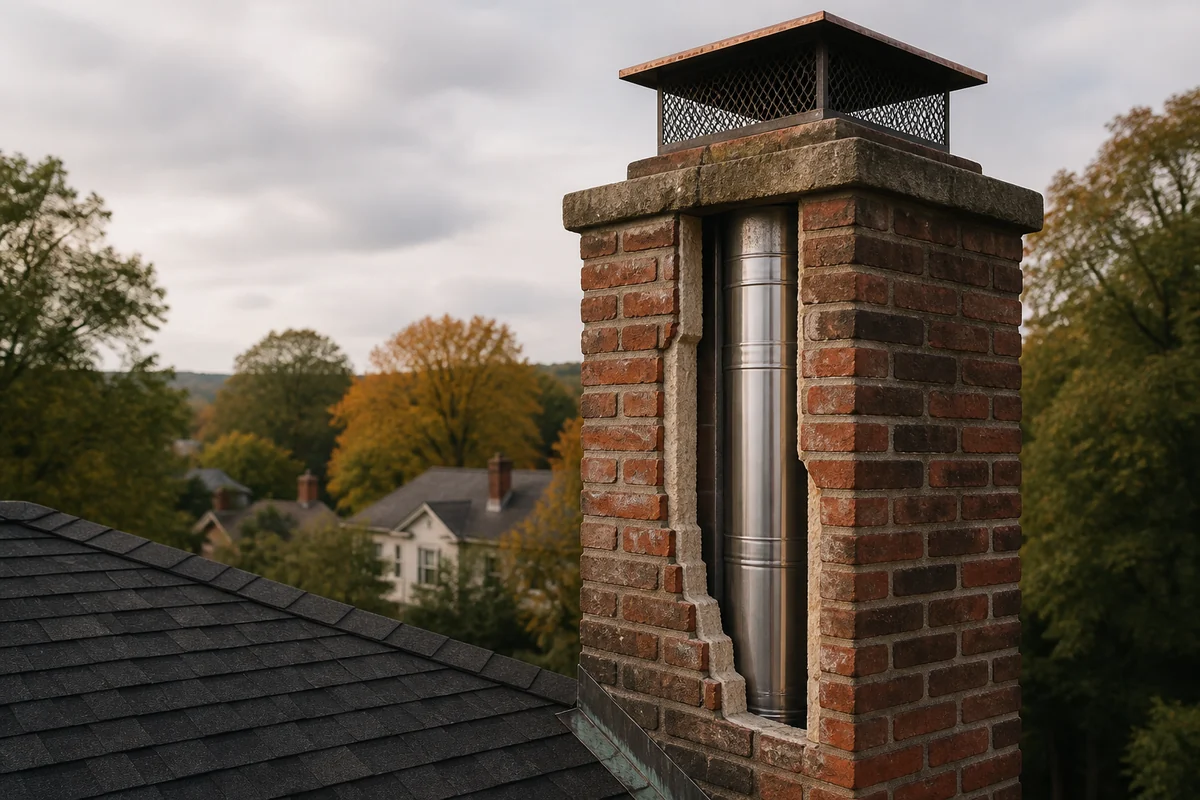
New City Chimney Pros provides independent planning information and quote routing for chimney work in South Nyack, about 7 miles from New City in Rockland County. This small Hudson riverfront community sits just south of Nyack beneath the Tappan Zee / Cuomo Bridge landing. Steep hillside lots and older houses make the route to the chimney part of the assessment. A tall brick stack may need sweeping, liner evaluation, and exterior masonry attention, each supported by its own findings.
Victorian and early twentieth century homes can retain original masonry chimneys even after fireplaces or heating equipment change. Their height and appearance do not establish what is inside. Begin with the chimney liner inspection guide, then arrange an assessment of the actual fireplace, appliance, and flue. The site helps route requests; the inspecting provider determines the appropriate work.
Start with the hillside and the chimney top
A South Nyack house can present a modest roof edge from the uphill street and a much taller elevation toward the river. Describe both sides when requesting a visit. Retaining walls, narrow paths, porch roofs, and changes in grade may prevent a ladder from reaching the position suggested by a front photograph. Ask how the provider will evaluate access to the crown and termination before promising a roof inspection.
Tight street access near the bridge landing also affects unloading and equipment staging. Identify the driveway entrance, gates, and any route that depends on neighboring property. Do not assume a vehicle can remain beside the house throughout the job. Ground photographs can help plan a visit, but the provider must decide whether ladders, another access method, or a return visit are necessary. Keep those arrangements separate from conclusions about chimney condition.
Sweeping and inspection answer different questions
For a wood-burning fireplace, a sweep request should identify recent use, accessible deposits, odors, and any known blockage. Tell the provider whether the fireplace has been idle or whether debris has fallen into the firebox. Cleaning can expose surfaces previously covered by deposits, but a clean opening does not demonstrate that the full flue is sound. Ask what can be inspected during the visit and what remains hidden.
An older South Nyack stack may contain an unlined passage, clay tiles, or a later liner concealed inside the original masonry. Record the material actually observed rather than labeling every historic chimney unlined. Where the circumstances call for more documentation, review the Level 2 chimney inspection guide. Request images tied to a particular passage, with any inaccessible sections clearly identified. A report should explain whether cleaning is needed to complete the evaluation.
Trace the tall flue before selecting a liner
Original fireplaces and later heating connections can follow different routes through the same masonry stack. Ask the provider to trace the active passage from its connection to the termination. Offsets, narrow sections, and inaccessible joints matter when deciding whether a proposed liner can be installed as intended. The height seen above the roof is only part of that route.
For clay-lined systems, distinguish a documented tile crack or missing joint from damage to the surrounding brickwork. The chimney liner repair guide explains questions to raise before accepting a replacement recommendation. If relining is proposed, the installation guide can help organize the scope around preparation, supports, connections, insulation, and the top termination. Ask whether old tile removal or interior access is included.
Compare stainless steel liners and cast-in-place systems only after the appliance and passage are documented. Neither material should be selected solely because the house is Victorian or the chimney is tall. Preserve the appliance instructions and have the responsible providers coordinate sizing and compatibility. If the house has multiple flues, the proposal should identify which one receives work and which remain outside the contract.
Separate river exposure from the source of water
River wind and repeated freezing and thawing make exposed crowns and mortar useful places to investigate. A crack at the crown, an open masonry joint, and a flashing defect can create different water paths. Photograph staining and visible deterioration from a safe location, then ask the provider to connect the proposed repair to the observed defect. River proximity alone does not explain an interior damp patch.
A tall original stack may have different conditions on its river-facing and sheltered sides. Request views of the accessible faces and note where the assessment could not reach. Crown repairs, repointing, brick replacement, flashing work, and cap changes should appear as distinct items when needed. An internal liner does not repair loose exterior masonry, and new mortar does not establish that an unseen flue joint is intact.
Discuss how repair materials and visible details will relate to the existing chimney. Older brickwork should receive a material-specific assessment before a masonry method is chosen. Ask what sound material can remain and how loose or damaged sections will be handled. If instability limits access, the provider should explain how that affects both the masonry work and the proposed flue evaluation.
Investigate gust-related smoke without guessing at a cap
Smoke that appears during river gusts deserves a record of the operating conditions. Note whether it comes from the fireplace opening, a connector, or another location, and whether kitchen or bathroom exhaust equipment was running. Share any recent appliance change or roof alteration. These observations help frame the inspection without deciding in advance that bridge-area wind is the cause.
The assessment may need to consider the termination, surrounding roof geometry, venting dimensions, obstructions, and air supply. Ask the provider to explain how each recommended change addresses a documented finding. A different cap should not become a substitute for investigating a restricted passage or an incompatible appliance connection. Do not use a symptom description or a photograph as remote clearance to keep operating a malfunctioning system.
Confirm the address, scope, and completion record
For South Nyack work, confirm the current enforcing office using the exact property address. A familiar community name or an older permit file may not identify the present process. Ask who handles permit inquiries and whether the proposed liner, exterior masonry, or appliance work requires inspection. Keep any visible termination changes in that discussion, especially when preserving the appearance of an older roofline matters to the owner.
Compare proposals against the same inspection record. Request the liner identity, preparation steps, masonry items, access arrangements, interior protection, cleanup, exclusions, and written conditions for additional work. The liner cost guide offers a framework for comparing scope. At completion, retain photographs of the connections and top assembly, product instructions, and applicable inspection records alongside the original findings.
Plan a South Nyack chimney assessment
Nearby guides offer useful comparisons: Nyack covers compact river-village properties, Piermont discusses another narrow Hudson setting, and West Nyack considers postwar homes and mixed appliance chimneys inland, and the Upper Nyack guide covers large riverfront and hillside houses with multi-flue stacks north of the village. For South Nyack, keep the emphasis on the tall original stack, the steep approach, and the condition of the weather-exposed masonry at your address.
Use the request form to describe the fireplace or heating appliance, recent use, symptoms, existing reports, and hillside access restrictions. Include ground-level photographs showing the chimney and approach if available. The request supports local follow-up for sweeping, inspection, liner, or masonry needs. It does not provide emergency dispatch or replace a direct assessment of the chimney.
Frequently asked
01How can I prepare for a chimney visit when my South Nyack lot slopes sharply?
Photograph the approach from ground level and describe steps, retaining walls, gates, and available parking. The provider should determine suitable ladder or equipment placement after reviewing the site.
02Can a tall Victorian chimney be swept without replacing its old clay liner?
Sweeping removes accessible deposits; replacement depends on the documented condition and intended appliance. Request separate cleaning findings and liner recommendations so chimney height alone does not decide the scope.
03What should an inspection establish if an original fireplace has no visible liner?
It should document the passage, accessible construction, connections, and viewing limits. Have the provider evaluate the intended use and necessary lining before treating the fireplace as ready to operate.
04Why might a South Nyack crown and its mortar joints need different repairs?
A crown sheds water at the top while mortar joins the masonry below. Cracks, loose joints, and water paths need separate assessment so a crown repair is not assumed to resolve deterioration elsewhere.
05What details help investigate smoke that appears during river gusts?
Record which appliance was running, whether exhaust fans were on, and where smoke appeared. Wind timing helps the investigation, but the provider still needs to assess the venting route, termination, and air supply.